

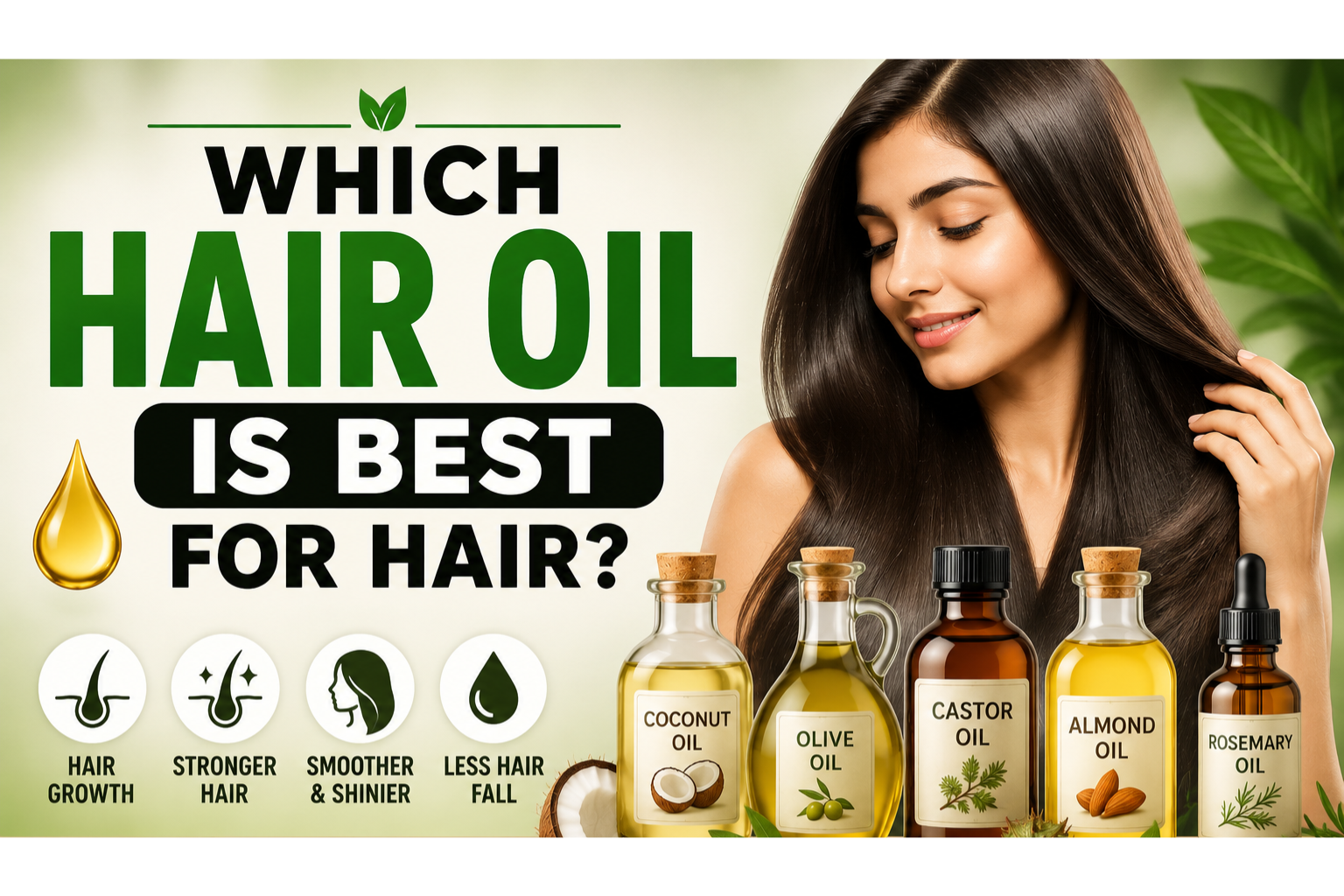
Best Hair Oil for Healthy Hair: Choosing the right hair oil can make a big difference in maintaining strong, shiny, and healthy hair. According to research published by the National Library of Medicine, certain natural oils such as coconut oil and almond oil may help improve hair health, reduce damage, and protect hair from dryness and breakage.
Hair oiling has been a traditional practice in India and many other parts of the world for centuries. People commonly use oils to reduce hair fall, add shine and volume, nourish the scalp, and prevent premature greying. However, different oils offer different benefits depending on hair type and concerns.
Coconut Oil for Hair
Coconut oil is obtained from the fruit of the Cocos nucifera plant. It is especially popular in South India and coastal regions, and is widely used across countries such as India, Sri Lanka, Indonesia, Malaysia, Australia, and parts of South America.
How Coconut Oil Benefits Hair
According to the study, coconut oil contains antibacterial and antifungal properties that help support scalp health. It also works as an emollient, forming a protective layer over the hair shaft that helps seal the cuticle and retain moisture.
Researchers also found that coconut oil acts as a natural lubricant, reducing friction between hair strands. This helps minimize tangling and makes hair appear smoother and healthier.

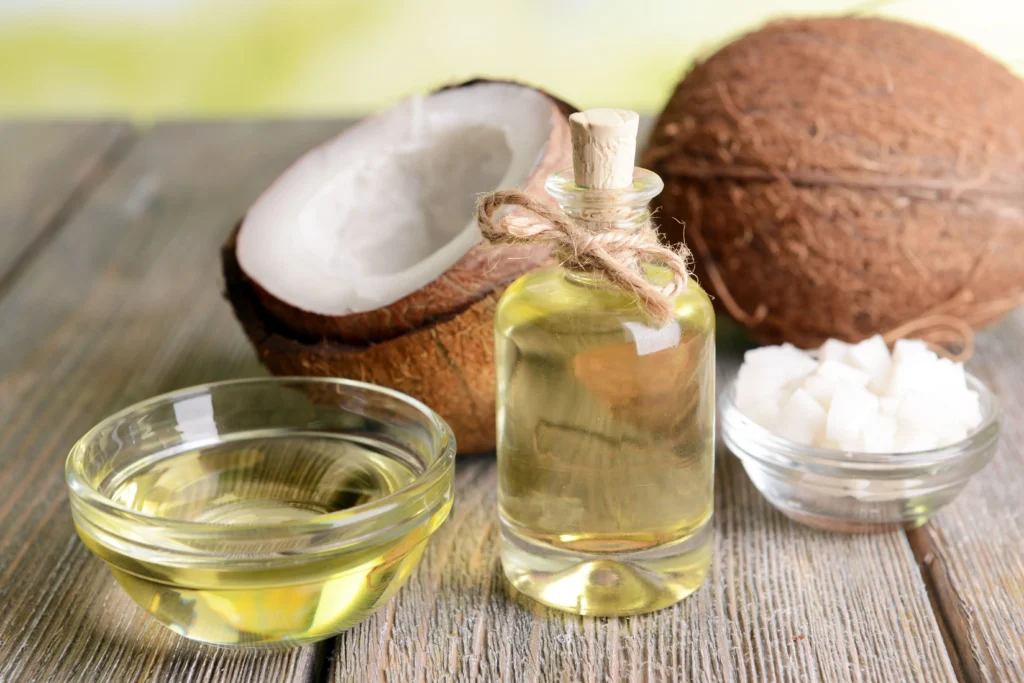
One of the most important benefits of coconut oil is its ability to reduce protein loss in hair. Due to its low molecular weight and straight-chain structure, coconut oil can penetrate deep into the hair shaft, helping strengthen hair from within and reduce damage caused by washing and styling.
Key Benefits of Coconut Oil
- Helps reduce protein loss in hair
- Keeps hair soft and moisturized
- Improves smoothness and shine
- Supports scalp hygiene with antibacterial and antifungal properties
- Helps reduce hair tangling and breakage
Almond Oil for Hair
The study also highlights the benefits of almond oil, which is extracted from the fruits of Prunus amygdalus. Almond oil is native to regions of the Middle East and South America and has been valued in Ayurveda for its nourishing properties.

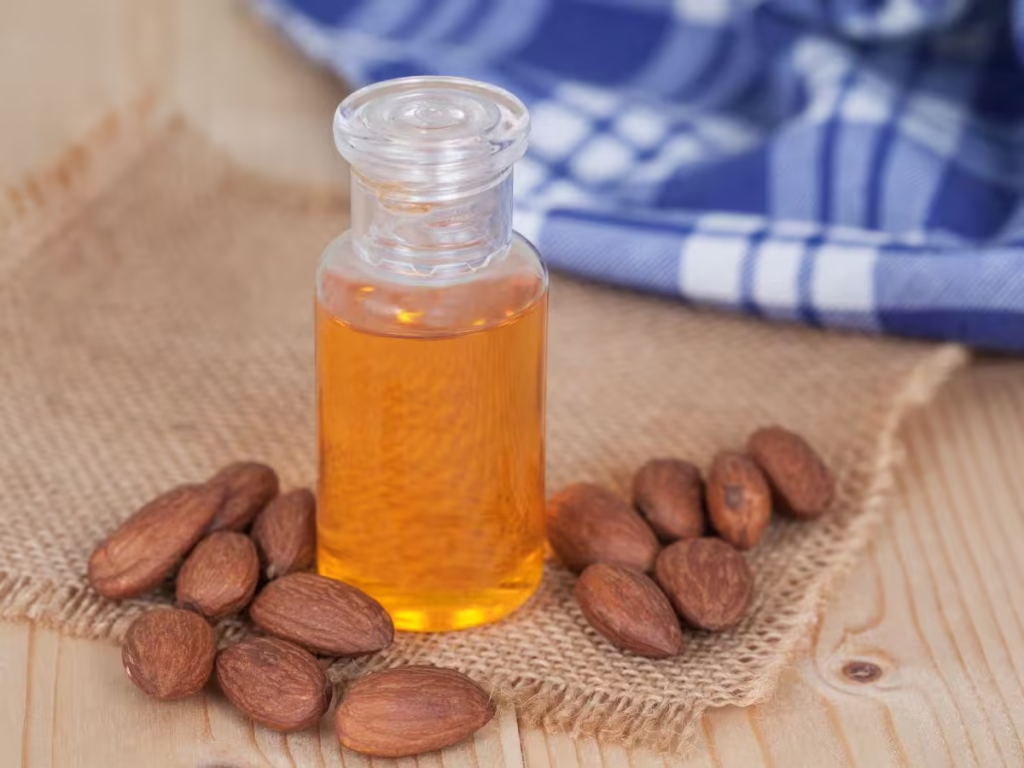
Almond oil is rich in:
- Monounsaturated fatty acids
- Polyunsaturated fatty acids such as linoleic acid
- Linolenic acid
- Stearic acid
- Palmitic acid
- Vitamin E
How Almond Oil Helps Hair
Research suggests that almond oil may help protect hair from damage caused by harmful UV rays. The fatty acids present in the oil help reduce structural damage linked to sun exposure.
Almond oil also contains emollient properties that help soften dry and rough hair by improving moisture retention. In addition, it may improve hair elasticity by filling gaps between cuticle cells, making hair feel smoother and more manageable.
However, unlike coconut oil, almond oil does not significantly reduce protein loss because it cannot deeply penetrate the hair shaft.
Key Benefits of Almond Oil
- Protects hair from UV-related damage
- Helps soften dry and frizzy hair
- Improves hair elasticity and texture
- Rich source of Vitamin E and healthy fatty acids
- Helps maintain smoother-looking hair
Which Oil Should You Choose?
Both coconut oil and almond oil offer excellent benefits for hair care, but the best option depends on your specific hair needs.
- Choose coconut oil if you want deep nourishment, reduced protein loss, and better protection against hair damage.
- Choose almond oil if your hair is dry, rough, or exposed to excessive sunlight and environmental stress.
Many people also combine both oils to enjoy the benefits of deep nourishment along with improved softness and shine.
Highlights:
- Coconut oil and almond oil are both beneficial for hair health.
- These oils help create a protective layer over the hair shaft.
- They may help reduce hair damage and improve overall hair texture.
- Coconut oil is more effective for reducing protein loss.
- Almond oil is especially helpful for softness and UV protection.
Disclaimer: This article is intended for general informational purposes only and should not be considered medical advice. Always consult a qualified healthcare professional or dermatologist for personalized guidance regarding hair and scalp concerns.


