

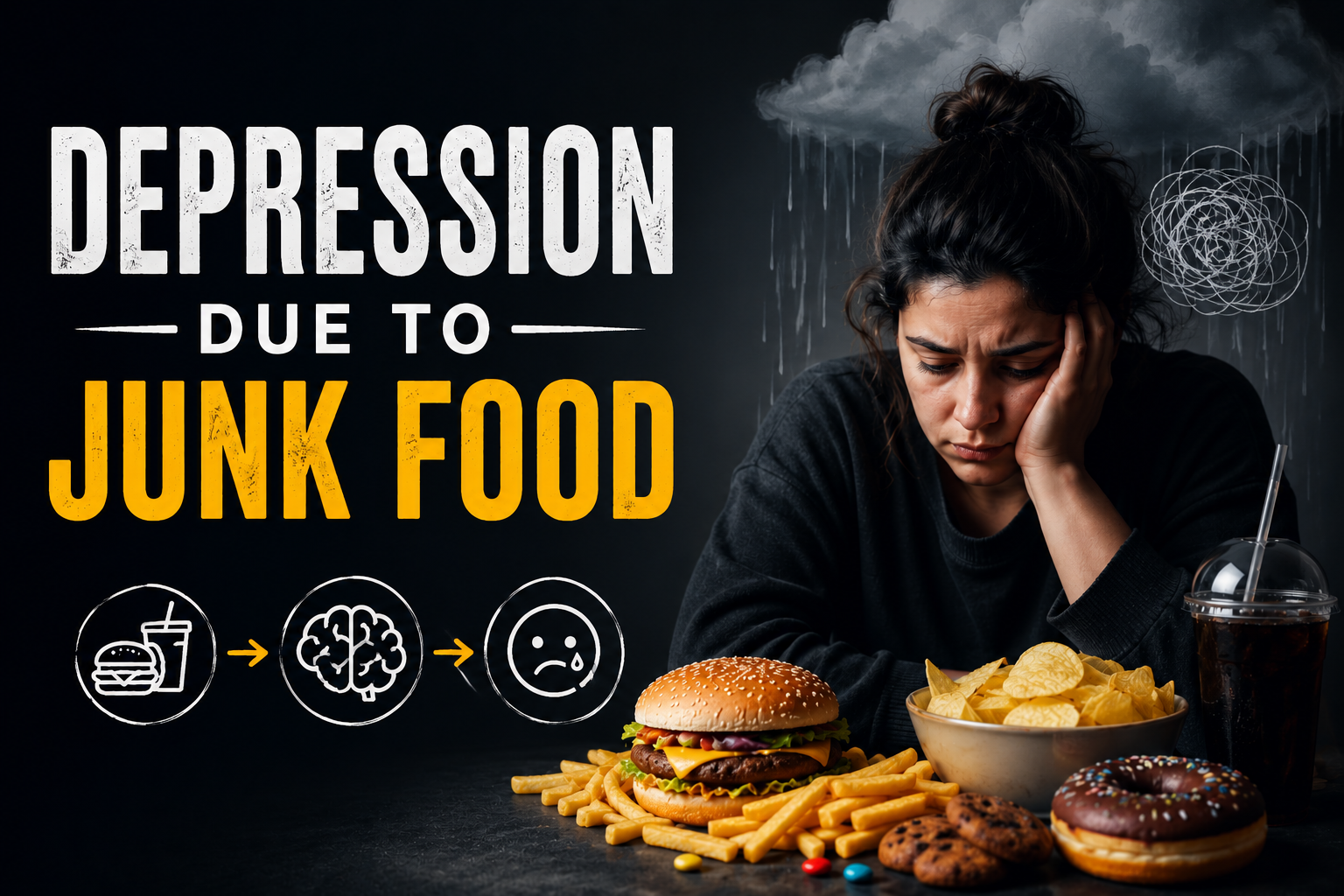
A recent study conducted by the Harvard T.H. Chan School of Public Health has revealed that excessive consumption of junk food may not only lead to obesity and diabetes but can also increase the risk of depression and other mental health issues.
In today’s fast-paced lifestyle, foods like pizza, burgers, chips, cold drinks, instant noodles, and momos have become a regular part of daily eating habits. These foods are popular because they are tasty, quick to prepare, and easily available almost everywhere. India has a massive market for processed and fast foods. However, research suggests that while junk food satisfies cravings, it may negatively affect brain health over time.
How Junk Food May Increase Depression Risk
According to research from the Harvard T.H. Chan School of Public Health, people who consume high amounts of ultra-processed foods are more likely to experience depression. The study analyzed health data from more than 31,000 women and found that the risk of depression was nearly 50% higher among those who frequently consumed packaged and highly processed foods.
Researchers explained that regular intake of processed foods may contribute to mood disorders. One major reason is the presence of artificial sweeteners and additives commonly found in packaged foods. These ingredients have been linked to depression, anxiety, and other mental health concerns.
How Junk Food Affects the Brain
Studies indicate that excessive junk food consumption can increase inflammation in the body. Foods high in sugar, unhealthy fats, and refined carbohydrates may trigger chronic inflammation, which can also affect the brain and contribute to depressive symptoms.
Another important factor is the connection between the gut and the brain, known as the “Gut-Brain Axis.” Eating too much junk food can reduce the number of healthy gut bacteria, affecting digestion and lowering the production of hormones linked to happiness and emotional well-being. As a result, stress, anxiety, sadness, and mood swings may become more common.
Research also suggests that foods like soft drinks, sweets, and processed snacks can cause rapid spikes and drops in blood sugar levels. These fluctuations may lead to irritability, fatigue, mood swings, and low energy levels.
Processed Foods That May Harm Mental Health
The study highlighted several processed foods that may negatively impact brain health when consumed regularly, including:
- Packaged chips
- Instant noodles
- Cold drinks and sugary beverages
- Processed and packaged meats
- Packaged bakery products
- Frozen foods
- Ready-to-eat meals
People who consume these foods daily may have a higher risk of depression, anxiety, and other mental health challenges.
Foods That Support Better Mental Health
Research from Harvard Health Publishing suggests that certain nutrient-rich foods may help improve mental well-being and reduce the risk of anxiety and depression. These include:
- Green leafy vegetables
- Fresh fruits
- Lentils and legumes
- Nuts
- Seeds
- Omega-3-rich foods
- Yogurt
Maintaining a balanced diet and reducing junk food intake can play an important role in supporting both physical and mental health.
Disclaimer
Based on current research, junk food is not only associated with weight gain but may also gradually impact mental health. If you frequently experience stress, sadness, anxiety, or mood swings, improving your eating habits and choosing healthier foods may help support overall well-being.
The content on Jugalupdates.com is intended for informational purposes only and should not be considered professional medical advice. Always consult a qualified doctor or healthcare specialist regarding any medical condition or health-related concerns.


