




In today’s fast-moving world, staying awake late at night and following unhealthy eating habits have become a part of daily life for millions of people. Whether it’s working late, binge-watching web series, scrolling endlessly on social media, or relying heavily on fast food and sugary drinks, modern lifestyles are silently affecting overall health. Among the organs most impacted by these habits are the kidneys.
Health experts now warn that irregular sleep schedules and poor dietary choices can significantly increase the risk of kidney-related diseases. Since kidney damage often develops slowly and without major symptoms in the early stages, many people do not realize there is a problem until the condition becomes serious.
Understanding how these lifestyle habits affect kidney function can help people make better decisions and protect their long-term health.
Why the Kidneys Are So Important
The kidneys are two bean-shaped organs located on either side of the spine. Although small in size, they perform several essential functions that keep the body healthy and balanced.
The kidneys help:
- Filter waste and toxins from the blood
- Remove excess water through urine
- Maintain electrolyte balance
- Control blood pressure
- Support red blood cell production
- Keep bones healthy by balancing minerals
Read More : How To Get Relief In Gas Fast: Effective Ayurvedic Remedies for Instant ReliefHealthy kidneys work continuously throughout the day. However, when lifestyle habits become unhealthy, these organs are forced to work harder, increasing the risk of long-term damage.
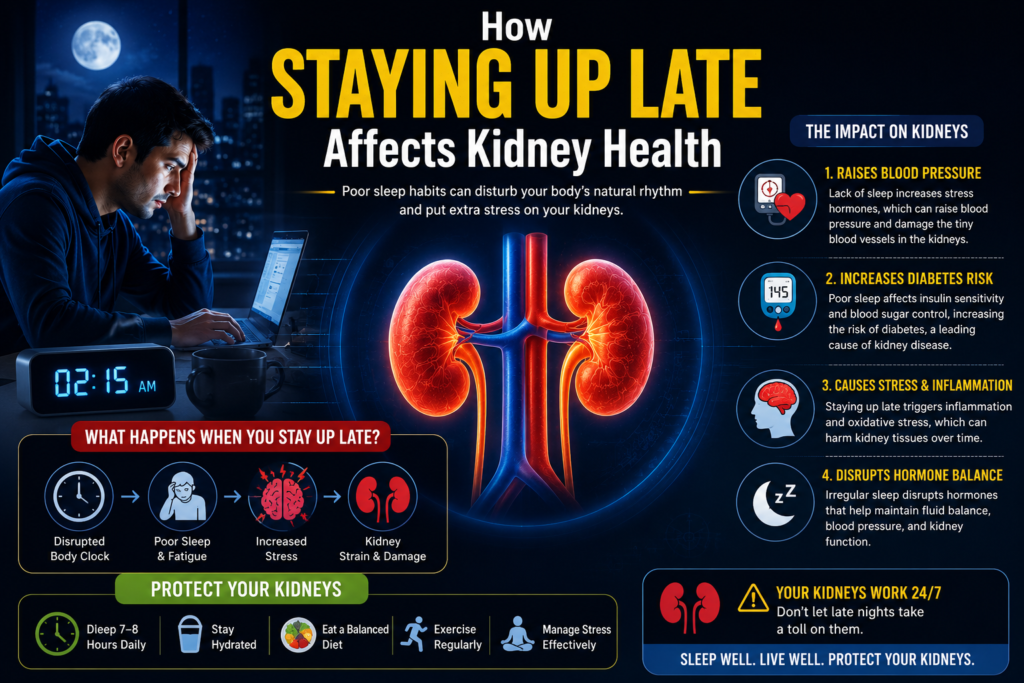
How Staying Up Late Affects Kidney Health
Experts believe that sleep plays a major role in maintaining proper kidney function. During sleep, the body repairs tissues, regulates hormones, and restores internal balance. The kidneys also follow the body’s natural biological clock, known as the circadian rhythm.
When someone regularly stays awake late at night, this rhythm gets disturbed, which may negatively impact kidney performance.
1. Sleep Deprivation Raises Blood Pressure
Lack of sleep can increase stress hormones in the body, leading to higher blood pressure levels. High blood pressure is one of the leading causes of kidney disease because it damages the tiny blood vessels inside the kidneys over time. When blood vessels become weak or narrow, the kidneys cannot filter blood properly.
2. Poor Sleep Increases the Risk of Diabetes
Research has shown that insufficient sleep may affect insulin sensitivity and blood sugar control. People who sleep less are more likely to develop Type 2 diabetes, another major cause of kidney damage worldwide. High blood sugar can slowly damage the filtering units inside the kidneys, reducing their ability to function effectively.
3. Staying Up Late Increases Stress and Inflammation
Sleeping late regularly may increase inflammation in the body. Chronic inflammation can contribute to several health problems, including kidney disorders. Stress caused by irregular sleep patterns may also affect hormonal balance and circulation, putting extra pressure on kidney function.
4. Nighttime Eating Habits Harm Metabolism
People who stay awake late often consume unhealthy midnight snacks, sugary drinks, or processed foods. Eating heavy meals late at night can slow metabolism and increase the risk of obesity, which is closely connected to kidney disease.
Read More : Pain in These 2 Body Parts Could Be an Early Sign of Liver Cancer – Know 10 Warning SymptomsHow Poor Diet Damages the Kidneys
According to health experts, diet is one of the biggest factors affecting kidney health. Processed foods, excessive salt, sugary beverages, and unhealthy fats can slowly weaken kidney function over time.
Foods and Habits That May Harm Kidney Health
Excess Salt Intake
Salt contains sodium, and consuming too much sodium can increase blood pressure. High blood pressure forces the kidneys to work harder and may damage them gradually.
Common high-sodium foods include:
- Chips and packaged snacks
- Instant noodles
- Fast food
- Frozen meals
- Processed meats
Sugary Drinks and Soft Beverages
Soft drinks and energy drinks often contain large amounts of sugar and artificial additives. Excessive sugar intake increases the risk of obesity and diabetes, both of which can lead to kidney complications.
Some studies also suggest that dark-colored sodas may contain phosphorus additives that can negatively affect kidney health when consumed excessively.
Processed and Junk Food
Highly processed foods are often rich in preservatives, unhealthy fats, sodium, and artificial ingredients. These foods may contribute to inflammation, weight gain, and metabolic disorders that increase kidney disease risk.
Inadequate Water Intake
Many people do not drink enough water throughout the day. Proper hydration is important because water helps the kidneys flush out toxins and waste effectively. Dehydration may increase the risk of kidney stones and urinary tract infections.
Excessive Alcohol Consumption
Drinking too much alcohol may affect blood pressure and dehydration levels, placing additional stress on the kidneys. Long-term alcohol abuse can reduce kidney efficiency over time.
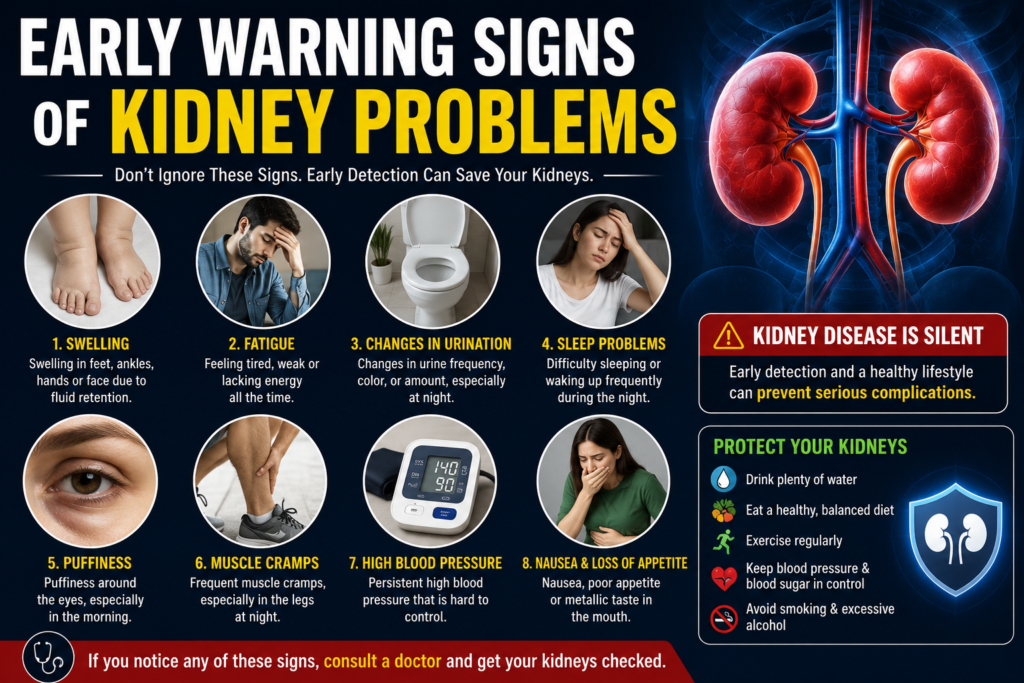
Early Warning Signs of Kidney Problems
Kidney disease is often called a “silent disease” because symptoms may not appear in the early stages. However, certain warning signs should never be ignored.
Common Symptoms Include:
- Swelling in feet, ankles, or hands
- Puffiness around the eyes
- Frequent fatigue or weakness
- Changes in urination patterns
- Foamy or dark-colored urine
- Muscle cramps
- Dry and itchy skin
- Trouble sleeping
- Persistent high blood pressure
- Loss of appetite or nausea
If these symptoms continue for a long period, medical evaluation is important.
Read More : Amazing Health Benefits Explained : What Happens to Your Body When You Quit Sugar for 60 Days?Who Is Most at Risk?
Certain groups of people have a higher risk of kidney-related problems, especially when combined with poor lifestyle habits.
High-Risk Groups Include:
- People with diabetes
- Individuals with high blood pressure
- Obese individuals
- Smokers
- People who frequently consume processed food
- Those who sleep less than 6 hours regularly
- Individuals with a family history of kidney disease
Expert Tips to Keep Your Kidneys Healthy
Health professionals recommend making small but consistent lifestyle improvements to support kidney function naturally.
1. Maintain a Healthy Sleep Schedule
Try to sleep for at least 7–8 hours every night. Going to bed and waking up at the same time daily helps maintain the body’s natural rhythm. Avoid using mobile phones or laptops right before bedtime, as blue light can disturb sleep quality.
2. Eat a Balanced Diet
A healthy diet can significantly reduce kidney stress.
Focus on:
- Fresh vegetables and fruits
- Whole grains
- Lean proteins
- Healthy fats
- Fiber-rich foods
Limit processed foods, excess sugar, and high-sodium meals.
3. Drink Enough Water Daily
Proper hydration supports kidney filtration and helps remove toxins from the body. The required amount of water may vary depending on climate, activity level, and health conditions, but regular hydration is essential.
4. Exercise Regularly
Physical activity helps maintain healthy blood pressure, weight, and blood sugar levels.
Experts recommend at least 30 minutes of moderate exercise most days of the week.
5. Avoid Smoking
Smoking damages blood vessels and reduces blood flow to the kidneys. It can also worsen existing kidney disease.
6. Monitor Blood Pressure and Blood Sugar
Routine health checkups can help detect problems early before serious kidney damage occurs. Keeping diabetes and hypertension under control is crucial for kidney protection.
7. Avoid Overuse of Painkillers
Frequent use of certain pain-relief medications may damage the kidneys over time. Always follow medical advice before taking medicines regularly.
Read More : How to Eat Bitter Gourd in Diabetes: Why Bitter Gourd Helps Control Blood SugarThe Importance of Lifestyle Awareness
Many kidney diseases are preventable through healthy daily habits. Unfortunately, modern lifestyles often prioritize convenience over health, leading to long-term complications. Experts stress that prevention is always better than treatment. Adopting healthier routines today can reduce the risk of chronic kidney disease in the future.
Simple steps like sleeping on time, eating nutritious meals, drinking enough water, and staying physically active can make a significant difference in maintaining kidney health.
Staying awake late at night and maintaining an unhealthy diet may seem normal in today’s busy world, but these habits can silently damage the kidneys over time. Health experts continue to warn that poor sleep, processed food, excessive salt, dehydration, and lack of exercise are major contributors to kidney-related problems.
Disclaimer : The good news is that lifestyle changes can greatly improve overall health and reduce the risk of kidney disease. Prioritizing proper sleep, healthy eating, hydration, and regular physical activity can help keep the kidneys functioning properly for years to come.
Taking care of your kidneys today is an investment in a healthier future.