



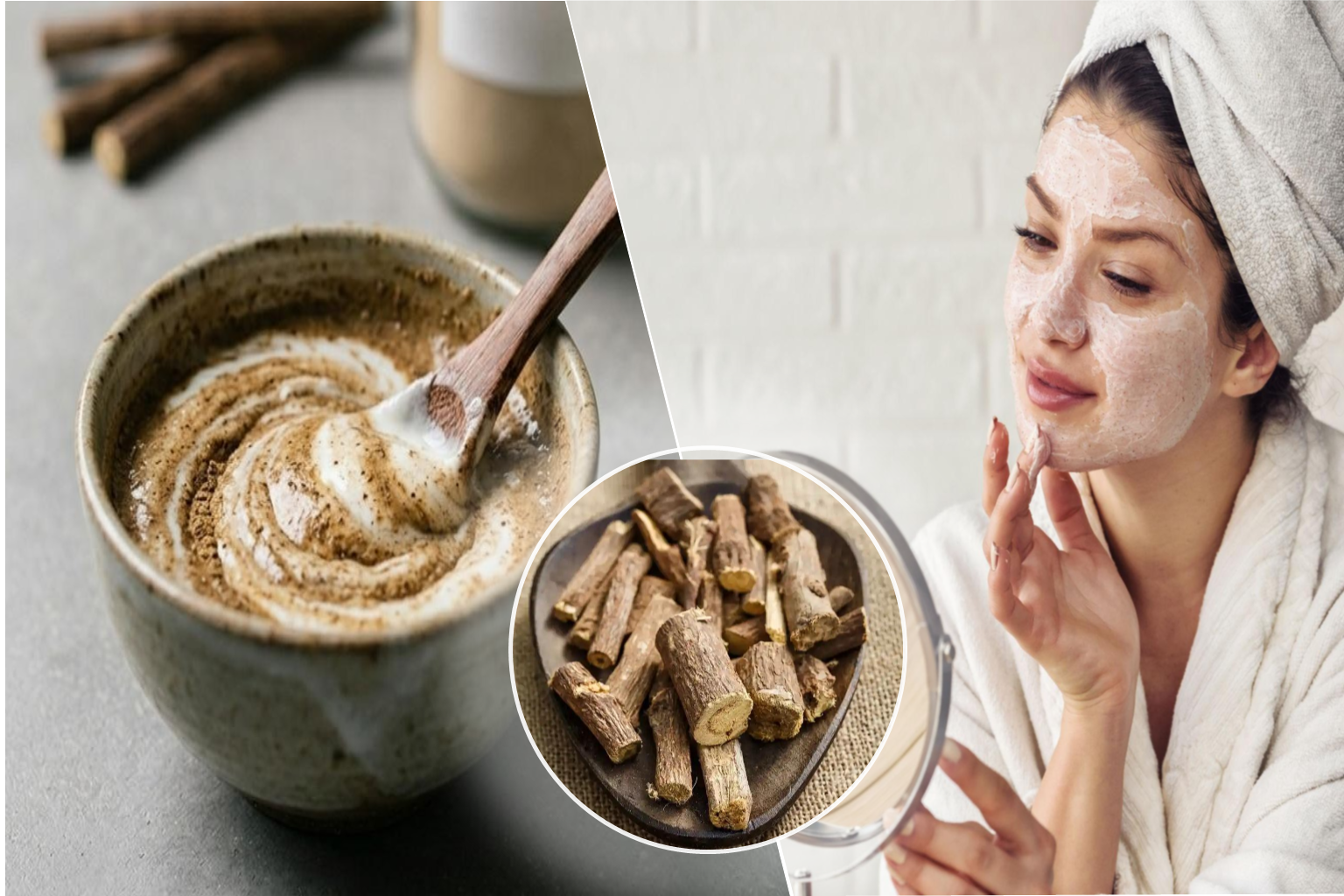
How Mulethi Helps Fade Acne Scars and Pigmentation Naturally
Mulethi (Licorice Root) is considered one of the most effective Ayurvedic ingredients for healthy and radiant skin. Known for its soothing and skin-brightening properties, mulethi has been used in traditional remedies for generations to reduce blemishes, acne scars, pigmentation, and uneven skin tone.
Rich in powerful plant compounds, mulethi deeply nourishes the skin and helps improve overall complexion naturally. If you struggle with acne marks, tanning, hyperpigmentation, stretch marks, or dull skin, adding mulethi to your skincare routine may help restore a clearer and smoother appearance.
How to Use Mulethi (Licorice Root) on the Skin:
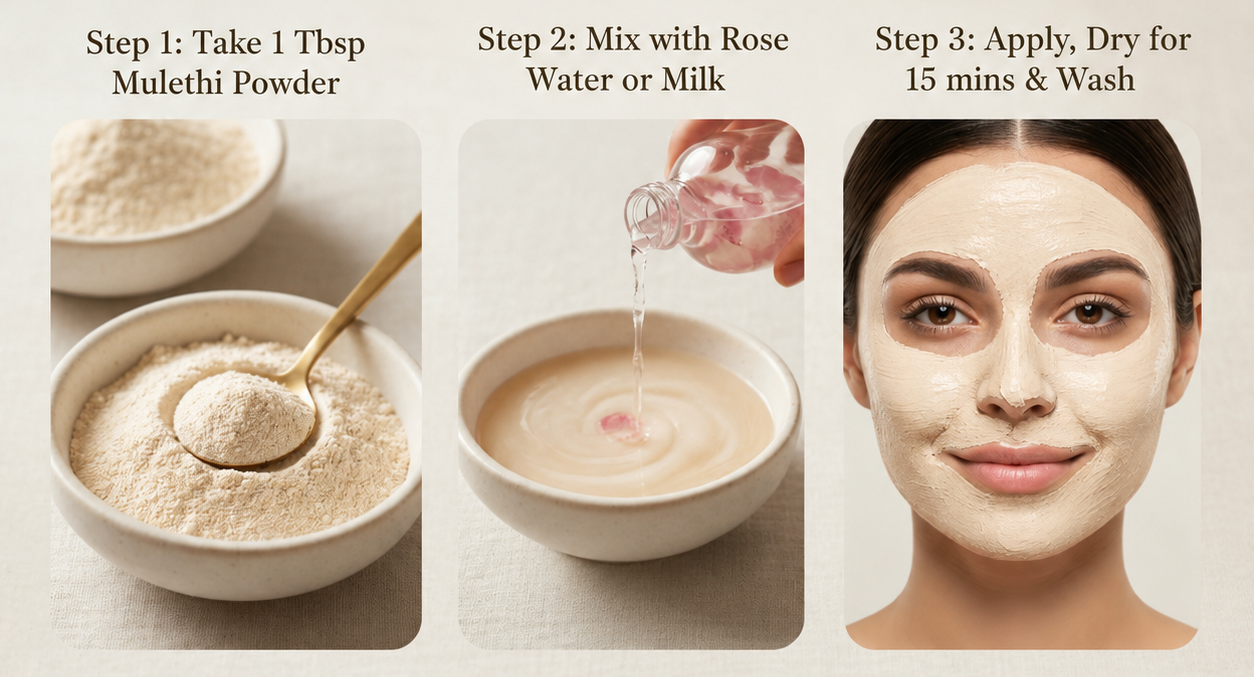
1. Mulethi and Rose Water Spot Mask
Mix mulethi powder with rose water to create a smooth paste. Apply it directly to acne marks, dark spots, or pigmented areas. Leave it on for 15–20 minutes and rinse with normal water. Use this remedy 2–3 times a week for visible results.
2. Mulethi with Aloe Vera Gel or Honey
You can also combine mulethi powder with aloe vera gel or honey. This soothing blend helps calm inflammation, reduce redness, and improve skin texture while keeping the skin hydrated.
3. Mulethi Face Pack for Sun Tan
After sun exposure, mix mulethi powder with yogurt or aloe vera gel and apply it as a cooling face mask. It helps reduce tanning, sun damage, and irritation while providing freshness to the skin during summer.
Benefits of Mulethi for Skin:
1. Brightens the Skin Naturally
One of the biggest benefits of mulethi is its natural skin-brightening effect. It contains a compound called glabridin, which may help reduce excess melanin production. This can gradually lighten pigmentation, tanning, freckles, and uneven skin tone, leaving the skin looking clearer and more radiant.
2. Helps Reduce Dark Spots and Hyperpigmentation
Mulethi is highly beneficial for people dealing with acne scars, melasma, or post-inflammatory pigmentation. It contains liquiritin, a natural compound that helps disperse melanin in the skin, which may help fade dark patches without causing irritation.
3. Minimizes Fine Lines and Premature Aging
Thanks to its antioxidant-rich properties, mulethi helps protect the skin from oxidative stress — one of the leading causes of premature aging. Regular use may help maintain skin elasticity, reduce fine lines, and slow down wrinkle formation.
4. Soothes Skin Conditions Like Eczema and Psoriasis
Ayurveda has long used mulethi for calming inflammatory skin conditions. Its anti-inflammatory, antimicrobial, and moisturizing properties may help soothe eczema, itching, rashes, dryness, and flaky skin.
5. Helps Control Acne and Acne Marks
Hormonal changes can trigger acne in both teenagers and adults. Mulethi works as a natural antibacterial ingredient that helps cleanse pores and prevent new breakouts. Over time, it may also help lighten stubborn acne scars and blemishes.
Final Thoughts
Mulethi is a simple yet powerful Ayurvedic ingredient that supports healthy, glowing, and blemish-free skin. Whether you want to reduce acne scars, pigmentation, tanning, or early signs of aging, mulethi can be a gentle and effective addition to your natural skincare routine. However, always do a patch test before applying any homemade remedy to your face, especially if you have sensitive skin.
Disclaimer : This article is intended only to provide general information about Mulethi (Licorice Root) and Ayurvedic approaches. It should not be considered a substitute for professional medical advice, diagnosis, or treatment. Always consult a qualified healthcare expert or doctor before starting any treatment for Skin or other health conditions.