



Many people tend to blame others for their stress, sadness, or anger. However, the truth is that emotional well-being is ultimately our own responsibility. Learning how to understand and manage emotions can significantly improve our quality of life and strengthen our relationships.
Why Emotional Management Matters
If you pay attention to everyday conversations, you’ll notice how often people talk about emotions. Statements like, “My feelings were hurt,” “No one understands me,” or “That person is very emotional” are common. Emotions influence every aspect of our lives, from relationships and decision-making to mental and physical health.
Our minds constantly experience waves of emotions. Some bring happiness, motivation, and peace, while others create stress, frustration, and sadness. Although it is impossible to stop emotions from arising naturally, we can learn to manage their impact through conscious awareness and emotional intelligence.
Learning to Manage Conflicting Emotions
One of the biggest challenges in life is dealing with the countless emotions that often pull us in different directions. While people grow physically over time, emotional maturity does not always develop at the same pace. As a result, many adults still struggle with emotional regulation and often feel overwhelmed by their feelings.
Instead of analyzing every negative thought repeatedly, it is more helpful to observe and control its influence. Many people frequently say, “I get angry too easily,” or “I become sad over small things.” Rather than identifying with these emotions, try to let them pass.
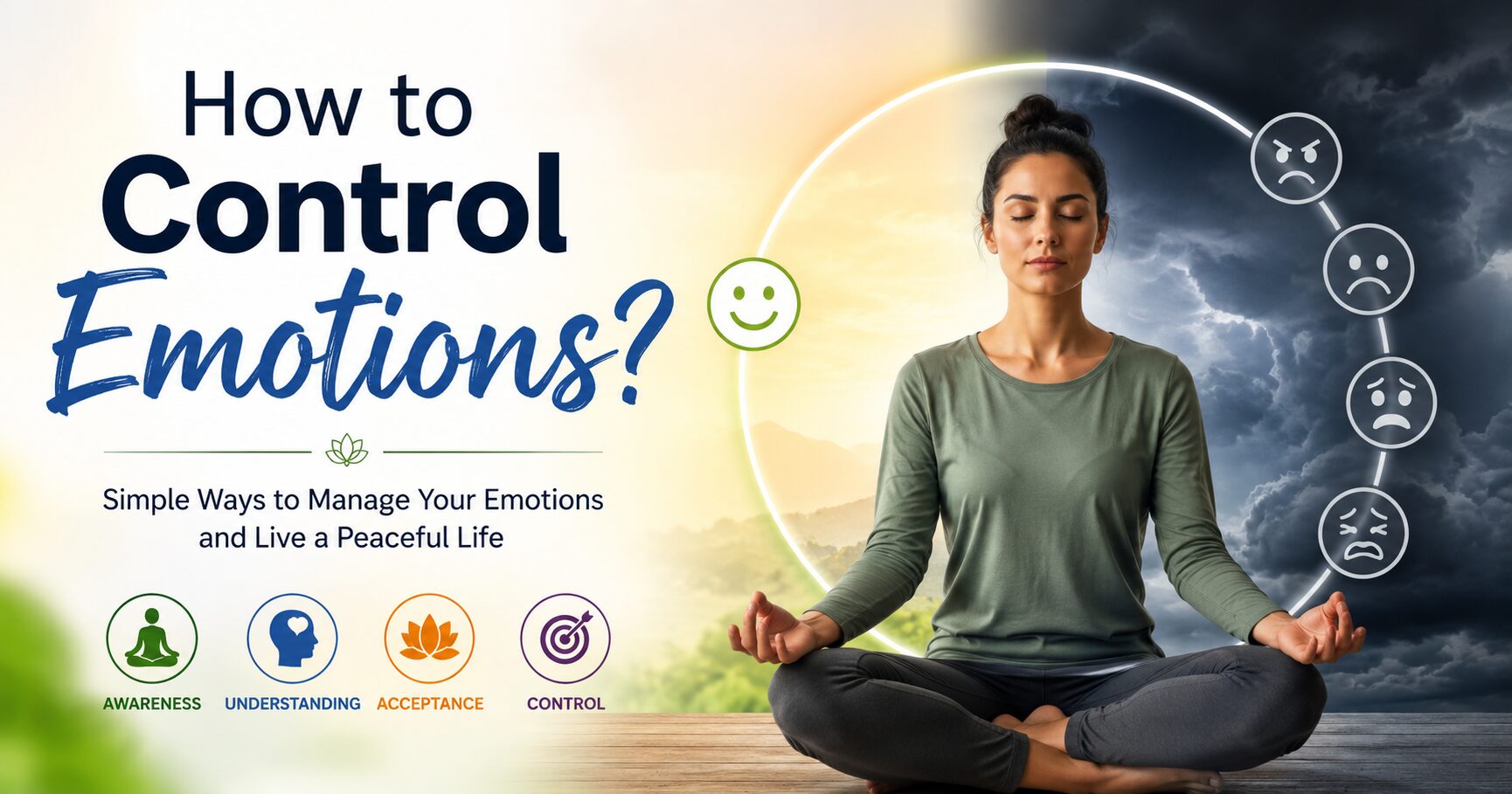
Think of emotions as clouds moving across the sky. The sky does not own the clouds—it simply allows them to pass through. Similarly, emotions come and go within our minds. Some are pleasant, while others are uncomfortable, but none should be allowed to dominate our inner world. Recognizing this is the first step toward emotional mastery.
Attachment: A Major Emotional Obstacle
Most emotions are connected to people, possessions, situations, or relationships. Excessive attachment often becomes a barrier to inner freedom and emotional balance.
Consider why small incidents sometimes affect your confidence so deeply. Often, it happens because someone else’s negative behavior becomes your emotional burden. Imagine a person carrying emotional garbage and throwing it outward through anger or criticism. If you choose to hold onto that negativity, you end up carrying their burden for years.
Instead of allowing someone else’s actions to determine your happiness, reclaim control of your emotional well-being. Keep the “remote control” of your emotions in your own hands. No one should have the power to steal your peace of mind.
Emotions Are Temporary Like Ocean Waves
No one feels happy or sad all the time. Emotions naturally rise and fall like waves in the ocean. Just as you cannot stop a wave from rising or force it to remain at its peak, emotions also follow their own natural rhythm.
Problems arise when we hold onto emotions for too long. Over time, accumulated resentment, fear, and disappointment can clutter the mind, leading to emotional exhaustion.
Positive emotions strengthen confidence, resilience, and self-awareness. Negative emotions, when left unchecked, can weaken mental and physical well-being. The key is not to suppress emotions but to understand and channel them constructively.
A healthy emotional life allows us to remain compassionate, sensitive, and connected to others. Without emotions, life loses its depth and meaning.
The Importance of Mental Cleanliness
Today, people are increasingly aware of environmental cleanliness, yet emotional and mental hygiene often receive less attention.
When negative thoughts dominate the mind, they create emotional pollution that affects not only us but also those around us. An angry or disturbed person often spreads tension within families, workplaces, and communities.
This is why emotional awareness is more important than ever. Practices such as meditation, mindfulness, deep breathing, and yoga can help cleanse the mind, reduce stress, and cultivate inner peace. Regular practice often leads to greater emotional stability and a more positive outlook on life.
Develop the Flexibility of Water
Thoughts and emotions are closely connected. Thoughts create emotions, and emotions influence our thinking. During difficult times, people often feel helpless because they don’t know how to respond to their emotional state.
Instead of resisting sadness or discomfort, try becoming more adaptable—like water. Water naturally adjusts to the shape of any container. It symbolizes humility, acceptance, and resilience.
Acceptance does not mean giving up. It means acknowledging the present moment while remaining willing to move forward. Water always finds a path around obstacles, teaching us the value of flexibility and patience.
When sadness arises, avoid fighting it. Observe it with curiosity and compassion. Often, beneath sadness lie other emotions such as fear, disappointment, or uncertainty. Accepting these feelings allows them to pass more naturally.
Just as dark clouds cannot permanently hide the sun, difficult emotions cannot permanently define your life. The more you resist them, the longer they may remain. Acceptance, awareness, and surrender often provide the fastest path toward healing.
If certain challenges feel too heavy to carry alone, trust in a higher power, spiritual practice, or personal belief system. By changing our perspective and using wisdom to guide our reactions, we can transform even difficult situations into opportunities for growth.
Final Thoughts
Emotional management is not about suppressing feelings—it is about understanding, accepting, and responding to them wisely. Emotions are a natural part of being human, but they should not control your life.
By practicing self-awareness, reducing unhealthy attachments, maintaining mental cleanliness, and learning to accept emotions as they come and go, you can develop greater inner peace, resilience, and emotional freedom.