

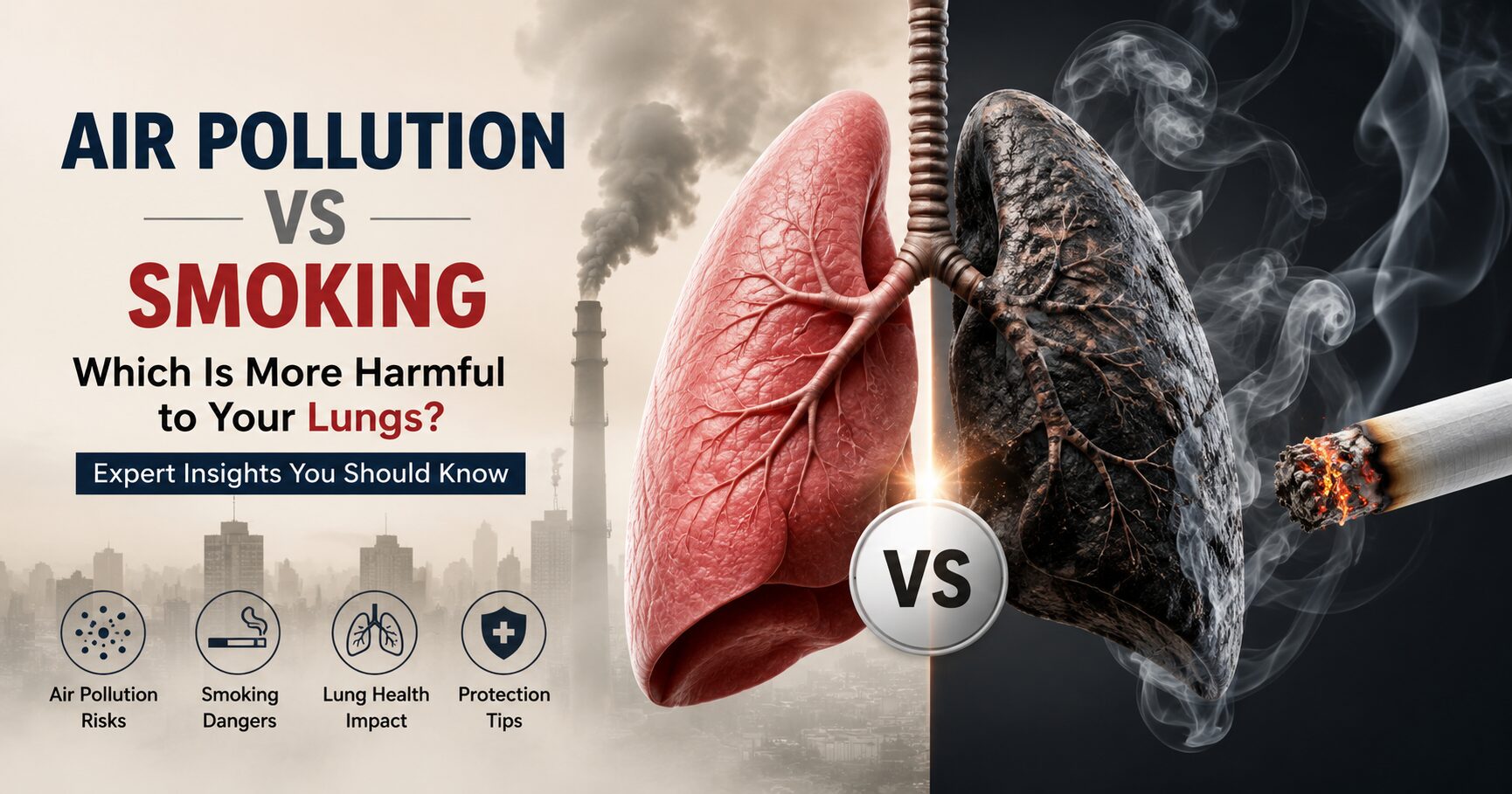
Many people wonder whether smoking or air pollution poses a greater threat to lung health. Both are significant risk factors for respiratory diseases, but understanding how each affects the lungs can help individuals make informed decisions to protect their health.
India is among the countries where air pollution remains a major public health concern. At the same time, smoking continues to be one of the leading causes of respiratory illnesses worldwide. This often raises an important question: which is more harmful to the lungs—air pollution or smoking? Health experts agree that both can seriously affect lung function, although their impact and associated risks may differ.
Why Smoking Is Considered More Dangerous
According to medical experts, cigarette smoke contains more than 7,000 chemical compounds. Hundreds of these substances are known to be harmful, and many have been identified as cancer-causing agents.
When a person smokes, these toxic chemicals travel directly into the lungs, gradually damaging lung tissue and impairing normal respiratory function. Smoking can lead to inflammation of the airways, reduced lung capacity, and a significantly increased risk of lung cancer.
Dr. Jugal Goriya, explains that smokers are continuously exposed to toxic substances that damage the respiratory system. Long-term smoking substantially increases the likelihood of developing chronic obstructive pulmonary disease (COPD), lung cancer, and other serious breathing disorders.
Read More: Staying Up Late and Poor Diet Can Seriously Damage Your Kidneys — Experts Reveal Warning SignsAir Pollution Is Also a Serious Threat
While smoking is often considered more harmful on an individual level, experts caution against underestimating the effects of air pollution.
Polluted air contains microscopic particles such as PM2.5 and PM10, which can penetrate deep into the lungs when inhaled. Continuous exposure to these pollutants may trigger inflammation and damage respiratory tissues over time.
People living in highly polluted urban environments are particularly vulnerable. Long-term exposure to poor air quality has been linked to conditions such as asthma, bronchitis, allergies, and reduced lung function.
Read More: Can Doing Cardio the Wrong Way Increase Heart Attack Risk? Safe Cardio Tips ExplainedWhich One Is More Harmful?
Experts suggest that a direct comparison between smoking and air pollution is not always straightforward. The health impact depends on factors such as the intensity and duration of exposure.
For individuals who smoke regularly, smoking generally presents a greater and more immediate risk to lung health because of the direct inhalation of toxic chemicals. However, people who do not smoke but spend years living in heavily polluted areas may also experience serious respiratory problems and long-term health consequences.
Ultimately, both smoking and air pollution can significantly harm the lungs and increase the risk of chronic respiratory diseases.
Read More: Face Icing vs Face Steaming: Which Is Better for Glowing and Healthy Skin?How to Protect Your Lungs
To maintain healthy lungs, consider the following preventive measures:
- Avoid smoking and all tobacco products completely.
- Wear a protective mask on days when air pollution levels are high.
- Ensure proper ventilation at home and in the workplace.
- Engage in regular physical activity to support respiratory health.
- Do not ignore symptoms such as persistent cough, breathlessness, or wheezing.
- Schedule routine health check-ups and lung assessments when necessary.
Read More: Periods Delayed Again? Try This Herbal Bedtime Decoction for Menstrual Wellness
Disclaimer
The information provided in this article is intended for general educational purposes only and should not be considered medical advice. Before starting any fitness program, making significant dietary changes, or adopting treatments for any health condition, consult a qualified healthcare professional. The publisher does not guarantee or verify the accuracy of specific health claims mentioned in this article.


